2025 Highlights - GEF 7 Coral Reef Rescue Project
The GEF 7 CRR Project has championed a critical shift toward inclusive governance by working towards the establishment of dedicated Climate Refuge Coral Reef National Hubs in the six project-implementing nations. Each National Hub is at a different stage of development and government endorsement. This momentum will continue into 2026 as climate-resilient coral reefs gain the attention of country governments in a more coordinated and formalised way.
A key output of this project is free, online self-paced courses for coral reef conservation. These include:
1. Coral Reefs: Introduction to Challenges and Solutions
2. Coral Reefs: Sustainable Blue Economy
3. Coral Reefs: Climate Resilient Communities
In 2025, “Coral Reefs: Climate Resilient Communities” was translated into Bahasa to ensure relevance for local audiences, with over 90 participants completing the course to date. More than 1,000 students have completed the other courses, with approximately 55% female participation, and 89% of participants rating the courses 5/5. Plans are underway to translate these courses into French in 2026 to ensure stakeholders in Madagascar can avail of these courses in an accessible language.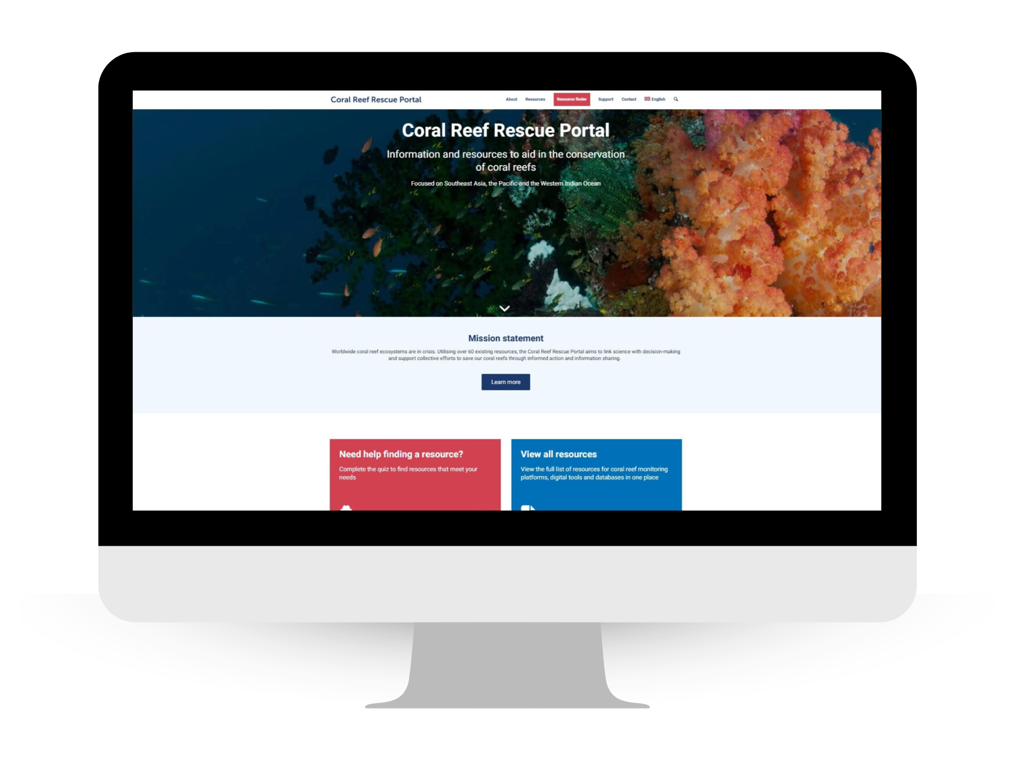
A new Coral Reef Rescue Portal was also launched in 2025, bringing together 70 existing coral reef datasets and resources in an easy-to-use platform. This tool is designed to bridge science and on-the-ground conservation. It helps marine managers and conservation practitioners make informed decisions by identifying the most suitable free resources for their projects from the vast array available online.
Alongside these new resources, the GEF 7 CRR Project team at the University of Queensland delivered a series of online and in-person events across all six countries. Highlights include:
· An online webinar in partnership with CRRI and Chris Wagner, an expert in conservation finance and the blue economy
· Three online training sessions for the Coral Reef Rescue Portal
· In-person orientation of the online courses and the Coral Reef Rescue Portal in Tanzania
· A virtual presentation to the Indonesian National Hub.
The team also attended numerous international conferences, including the Pacific Islands Ocean Conference (Solomon Islands), WIOMSA Conference (Kenya), the UN Oceans Conference (France) and the ReefCloud Pacific Regional Workshop (Australia), and conducted numerous site visits.
Coral Reef Rescue - Country Highlights - 2025
These national and international events were supported on the ground with local activities led by local teams. Here are some highlights from each country this year:
Fiji: A four-day Livelihood and Financial Literacy Training Workshop was held in Fiji’s Northern Division, engaging 52 community representatives from Bua, Cakaudrove, and Macuata provinces. The training, delivered in partnership with ANZ Fiji and supported by the Macuata Provincial Council Office, focused on financial management, sustainable livelihoods, and business governance.
Indonesia: Learning events were conducted in Bondalem Village, Bali and Larantuka, East Nusa Tenggarra focusing on the Coral Reefs: Introduction to Challenges and Solutions course. The draft of the Coral Reef National Plan of Action 2025-2029 has been developed in collaboration with technical specialists and the national government. This action plan is expected to be finalised in 2026 following public consultation and ministerial endorsement.
Madagascar: The National Hub was successfully launched, gathering coastal fishers and local stakeholders for workshops highlighting the impact of climate change on their reefs. These stakeholders are now working together to guide Madagascar's National Action Plan for Coral Reef Conservation.
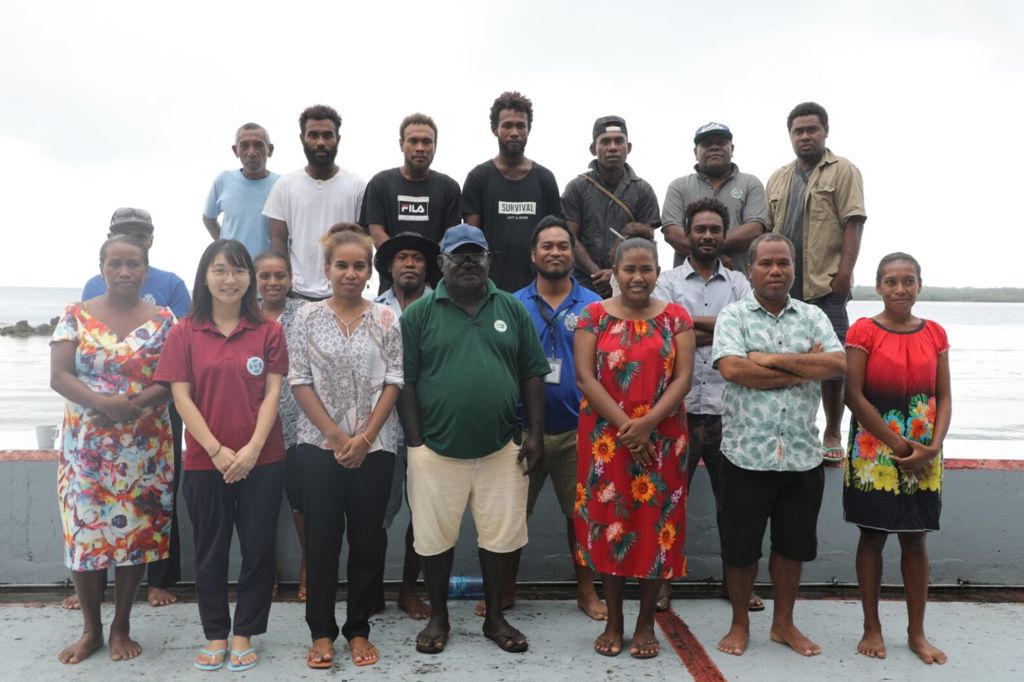
Solomon Islands: Online learning courses reached over 100 participants through the National Hub network alongside school outreach visits. A regional community of practice comprising 34 local representatives and 52 Coral Triangle Initiative Women Leaders Forum participants was established to focus on peer learning and gender-inclusive approaches to coral reef conservation.
The Solomon Islands also conducted comprehensive multi-stakeholder consultations with 72 Provincial Government representatives, six NGOs, and approximately 90 community groups across three provinces to inform the development of Solomon Islands' first Coral Reef National Action Plan (NAP).
Tanzania: Activities included a capacity-building program to train conservation staff on using the National Coral Reef Database, and a four-day workshop in conjunction with the Swedish Agency for Marine and Water Management (SwAM), focusing on building staff capacity around Marine Protected Areas (MPAs).
The National Plan of Action for Coral Reef Conservation and the National Coral Reef Hub (NCRH) was officially launched in July 2025. The event was attended by 107 participants, including representatives from government ministries, universities, NGOs, international organisations, local governments (including Zanzibar), media, and key partners such as the PMU.
These short overviews provide a glimpse into the work happening in each country as part of the GEF 7 CRR Project. In each country, National Hubs are continuing to advocate for climate-resilient reefs. Alongside these in country activities, a series of communication workshops were led by a team of experts from the University of Queensland to help National Hubs develop comprehensive communication strategies to further raise awareness and plan advocacy and outreach activities for the final year of the project.
The science is also encouraging. A recent peer-reviewed study by Ford et al. (2025) in Coral Reefs documented reefs in Fiji that were devastated by Category 5 Cyclone Winston in 2016 yet rebounded to near pre-cyclone levels within four years. The research found that rapid resilience was directly linked to healthy fish populations, high reef connectivity, and strong local management, providing compelling empirical evidence that when ecological integrity is maintained, nature can recover even in a warming world.
As the GEF 7 CRR Project enters its final year, the team looks forward to building on the achievements of the past three years and delivering an impactful 2026.
.jpg)