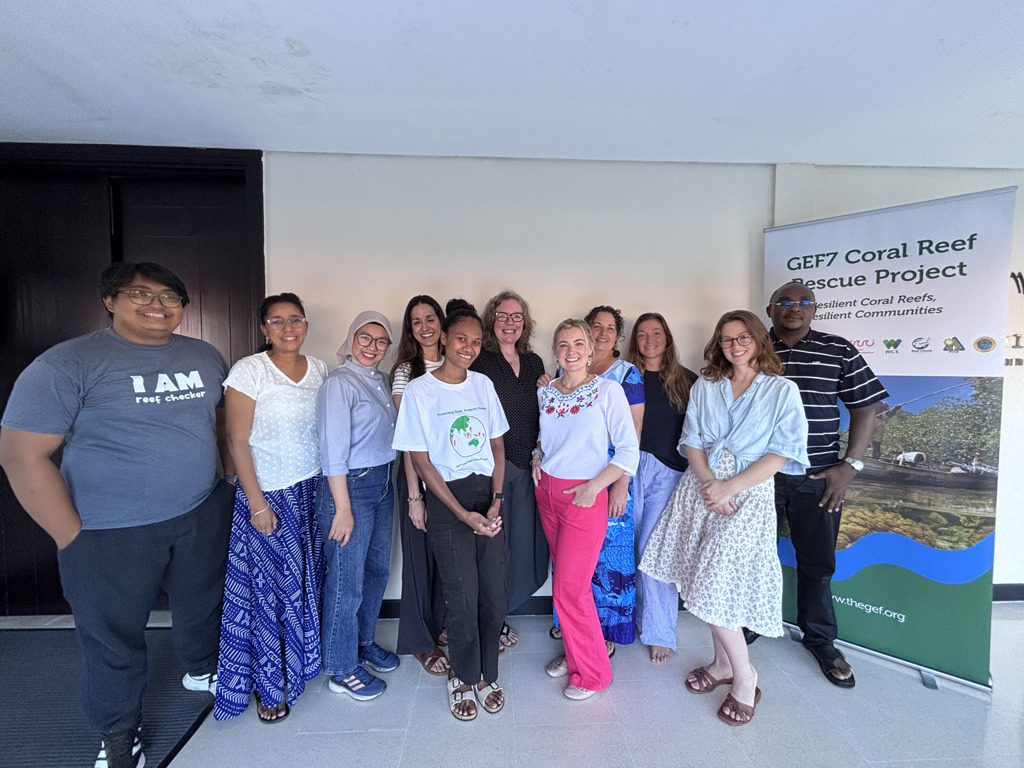
Back Together in Bali: How the Coral Reef Rescue Team is Building Momentum for Change
This is the first time since 2023 that the full team had gathered in person. The workshop was fittingly hosted by our Reef Check colleagues in Indonesia. Indonesia is home to 10% of the world’s coral reefs. More than 25,000 km² of coral reefs surround Indonesia and represent 41% of the climate refuge reefs across four provinces: East Nusa Tenggara Province, South Sulawesi Province, Maluku Province, and the Riau Archipelago.
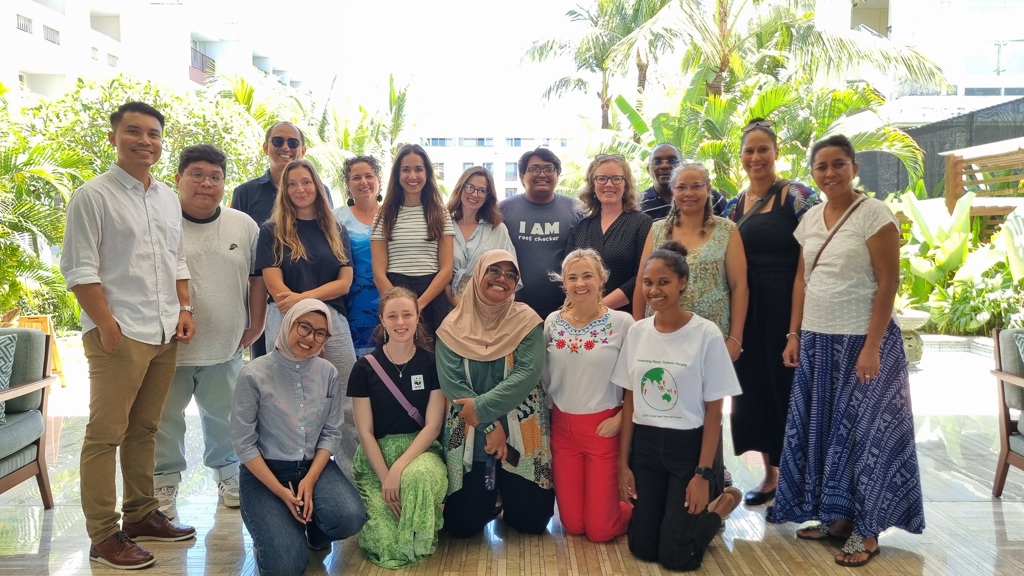
The week-long workshop brought together country teams from Fiji, Indonesia, Madagascar, Philippines, Solomon Islands and Tanzania, alongside the project management unit and global leadership to assess what is working, identify challenges, share lessons learned and help plan for the remainder of the project.
The Coral Reef Rescue Project is a US$7m initiative funded by the Global Environment Facility to build capacity and solutions that ensure the long-term survival of climate refuge coral reef ecosystems and the communities that depend on them. The project is implemented by the World Wildlife Fund (WWF) and executed by The University of Queensland in partnership with Wildlife Conservation Society (Fiji, Madagascar, Solomon Islands), Yayasan Reef Check Indonesia, Palawan Council for Sustainable Development, Philippines and Marine Parks and Reserves Unit, Tanzania.
Jacquelyn Beattie, Senior Project Manager, WWF GEF Agency, added “We are halfway through the project and are now focusing on successfully completing this complex global project. Following our recent mid-term evaluation, this was the perfect time for the team to gather and reflect on the next steps. It is incredible to see the progress across all the countries and how, over the course of the workshop new connections were made and similar challenges and experiences were discussed and solutions found.”
Celebrating progress
The workshop opened on a positive note, with each country team delivering a creative “news report” highlighting successes from the project so far. The interactive session showcased the wide-ranging impact of the Coral Reef Rescue Project highlighting community engagement, the work of the National hubs and the National Action Plans.
Representing Indonesia, Fawzia Nasution from Reef Check Indonesia, emphasized the value of empowering local communities to share their stories of conservation projects and to help bring these local stories to a wider audience. Working with youth leaders in local communities and capturing local knowledge that has been handed down over generations, helps to empower local communities to participate fully in reef conservation. She showcased the train-the-trainers workshop held in Alor and Anambas where 22 leaders recently shared their experiences in marine conservation.
Lessons learned across all project components
Through breakout discussions, partners reflected on lessons learned from each of the four project components across the different geographies. Similar challenges were experienced across the different countries and extensive discussions on how to address these problems provided a menu of innovative ideas for in country partners.
A key focus of the workshop was sharing best practice approaches to stakeholder engagement and learning from each country as they continue to navigate what inclusive engagement looks like in their own country contexts.
Participants shared some successful approaches including working through trusted in-country partners, aligning with existing coral reef or marine initiatives, and holding one-on-one consultations.
At the same time, teams discussed challenges such as geographic distance, language barriers, inconsistent participation and difficulties engaging certain groups including private sector actors, local government representatives, and remote communities.
Jennifer Dunn, Project Manager added “As we move into year four of the GEF CRR Project, we are starting to see the foundational work pay off – progress and impact is noticeable. We now have a suite of free online courses in numerous languages, a dedicated online decision support tool, alongside extensive local engagement in each project country, established National Hubs and National Action Plans nearing completion, the sense of momentum is tangible and inspiring.”
Looking ahead, partners identified opportunities to improve inclusivity by engaging more women, youth, traditional leaders, religious leaders, and other marginalised groups. There were many examples of how this is already working in different countries across the project.
Final year priorities
As the project enters its final year, country teams outlined key priorities for 2026, including: expanding learning opportunities for local communities and strengthening communities of practice. Each country is currently at various stages of development with the National Hubs and National Action Plans and advancing and finalising these initiatives is a key priority.
A key message emerged throughout the workshop: while significant progress has been made, long-term success will depend on sustained collaboration, stronger local ownership and continued investment in communities working on the frontlines of coral reef conservation.
Jacquelyn Beattie, Senior Project Manager, WWF GEF Agency, “We have definitely seen countries shift from a siloed and fragmented view of coral reef conservation towards a multi sector unified approach. Throughout the workshop, we saw extensive knowledge sharing, Tanzania giving ideas to Indonesia and working with Fiji on other projects. Going forward traditional knowledge is key and we hope to amplify this traditional knowledge to deliver sustainable conservation solutions.”
The current GEF 7 CRR Project is due to finish in 2027, but the impact of this project will be felt for decades to come as the National Hubs in each country continue to evolve and champion coral reef conservation. The National Action Plans will continue to embed conservation best practice in local communities and in policy decisions at National Level to ensure the longevity of this project and the work of the CRR global team.
About the Coral Reef Rescue Project
The Coral Reef Rescue Project is a US$7m initiative funded by the Global Environment Facility to build capacity and solutions that ensure the long-term survival of climate refuge coral reef ecosystems and the communities that depend on them. The project is implemented by the World Wildlife Fund and executed by The University of Queensland in partnership with Wildlife Conservation Society (Fiji, Madagascar, Solomon Islands), Yayasan Reef Check Indonesia, Palawan Council for Sustainable Development, Philippines and Marine Parks and Reserves Unit, Tanzania.
Free Online Resources for Coral Reef Conservation
Complementing the work in each country, the GEF 7 CRR project has released free online courses on coral reefs. These include Coral Reefs: Introduction to Challenges and Solutions, Coral Reefs: Sustainable Blue Economy, Coral Reefs: Data and Monitoring, Coral Reefs: Climate Resilient Communities.
Alongside these courses, a new online decision support tool was created Coral Reef Rescue Portal. This brings together over 70 existing coral reef datasets and resources in one easy-to-use, searchable platform.
.jpg)