From Research to Action: How the 50 Reefs Paper Continues to Shape Coral Reef Conservation
Since its publication in 2018, the research paper “Risk-sensitive planning for conserving coral reefs under rapid climate change,” also known as the 50 Reefs paper, continues to guide global coral reef conservation, turning groundbreaking science into real-world action.
This was evident in Ambon, Maluku, Indonesia, recently, where renewed connections between two of the paper’s original authors resulted in a suite of global and national organisations collaborating on climate-resilient strategies for coral reefs.
In 2017-2018, Professor Maria Beger (Professor at the University of Leeds and Principal Investigator at ClimateREEFS) and Professor Emeritus Ove Hoegh-Guldberg (University of Queensland and Chief Scientist for the Coral Reef Rescue Initiative) collaborated as authors on this landmark paper, which led to the establishment of 50 Reefs refuge reefs.
Professor Hoegh-Guldberg highlights the uniqueness of this climate-focused research and the need for the 50 Reefs Initiative:
“The scientific study behind 50 Reefs was the first-ever research of its kind. It was designed to address where best to focus conservation and restoration efforts to help save the ecosystem most vulnerable to climate change. Since its publication in 2018, the 50 Reefs scientific study has been used by organizations and funders worldwide to improve the targeting of action.”
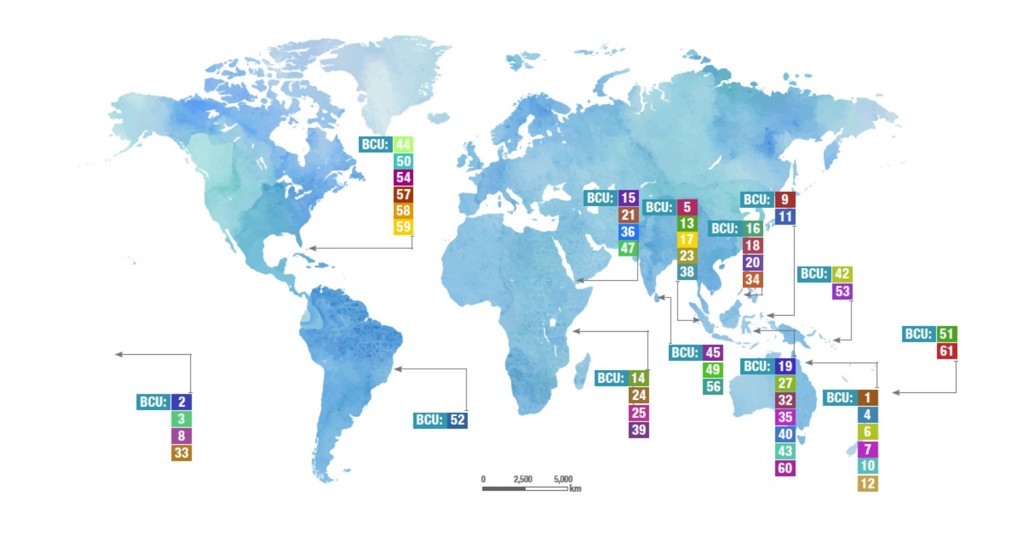
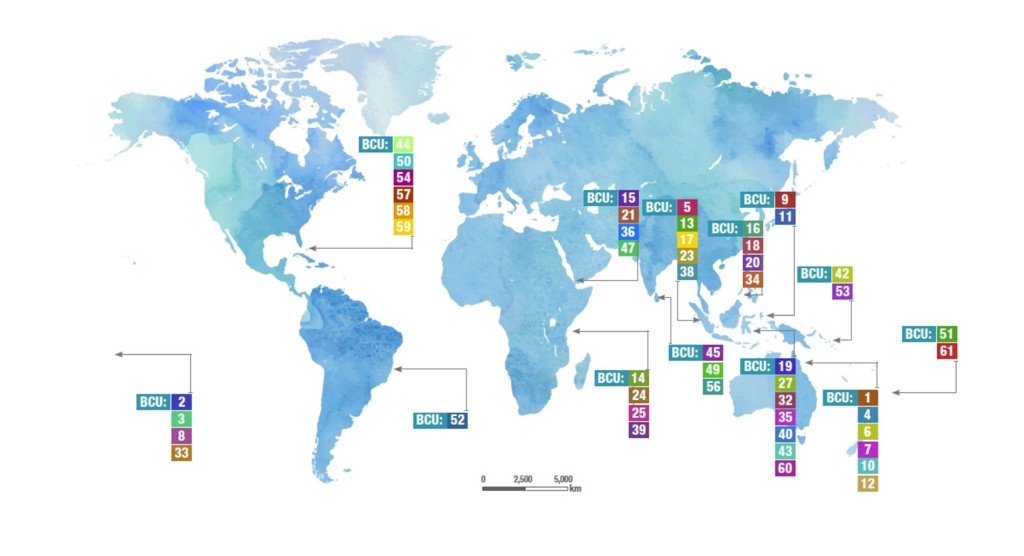
Figure 1: The 50 Reefs portfolio of Bioclimatic Units (BCUs) across the globe. These Bioclimatic Units (BCUs) in the "50 Reefs" project are specific, roughly 500km² reef areas identified by scientists to pinpoint corals most likely to survive climate change (bleaching, storms) and repopulate degraded reefs.
Through a chance meeting at the ICCB 2025 conference in Brisbane, Australia, earlier this year, Professor Hoegh-Guldberg, Professor Beger, and colleagues began discussions about future collaborations, given their continued interest in climate-resilient reefs, both with funded projects that are working within the same space and geographies.
Following the publication of 50 Reefs, Professor Beger has continued to work in the field of climate-resilient reefs and collaborated with Professor Gino Limmon (Pattimura University -UnPatti, Indonesia) and Rocky Sanchez Tirona (Rare, Philippines) to establish ClimateREEFS, a consortium of universities, development agencies, and NGOs through the CLARE Programme. The Clare Programme is a UK- Canada framework research programme on Climate Adaption and Resilience.
The ClimateREEFS programme tests how we can identify adaptive reefs from space. The social vulnerabilities of different stakeholders, particularly women and marginalised groups is being assessed. This knowledge will lead to a shift in management approaches worldwide, which typically focus on reefs less exposed to heat stress while overlooking biological and social adaptations that can mitigate the risks posed by climate change to sustainable ocean livelihoods.
Professor Beger highlighted the role of ClimateREEFS for climate-resilient reefs and communities,
“ClimateREEFS is a project to identify the climate vulnerability of coastal communities together with gender and socially inclusive adaptation pathways, geospatial research to detect adaptive reefs from satellite-derived data, and ecological and genomic research to pilot an analysis that tests the interplay of climate change-adaptiveness from genes to people.”
At the same time, Professor Hoegh-Guldberg, in partnership with WWF, helped to establish the Coral Reef Rescue Initiative, a partnership to safeguard globally significant coral reefs and address the needs of communities that depend on them for survival. WWF and the University of Queensland are executing a project through funding from the Global Environment Facility; for the Coral Reef Rescue Project: Resilient Coral Reefs, Resilient Communities (GEF 7 CRR).
The GEF 7 CRR is the main implementation driver of the Coral Reef Rescue Initiative and works in six countries identified as hosting some of the most climate-resilient coral reefs globally. It now collaborates with in-country sub-executing partners, who have helped to establish a host of Technical Working Groups across multiple conservation thematic areas and National Hubs, multi-sectoral and multi-stakeholder decision-making bodies for coral reefs nationally. Additionally, the GEF 7 CRR has created free, online resources to raise awareness of coral reef conservation strategies.
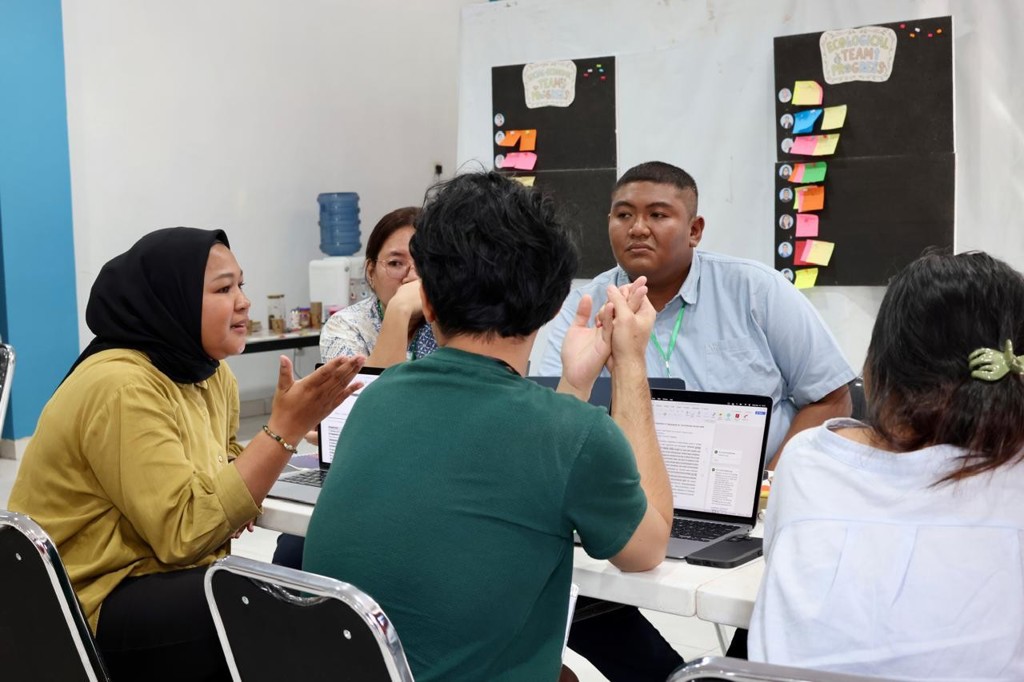
In Ambon, Indonesia, the ClimateREEFS team, led by Cilun Djakiman, UnPatti, delivered “IntegrateAdapt,” a two-week workshop for project-affiliated early-career researchers (ECRs) from the Philippines and Indonesia. Djakiman, who is an ECR herself, said: “The workshop marked the first time participants undertook in-person, interdisciplinary, integrated data analysis, having worked and trained online for many months”. The workshop was supported by the CLARE Responsive Fund, administered by African Centre for Technology Studies (ACTS) and PlanAdapt under the CLARE Programme.
The workshop focused on supporting ECRs from the region who are impacted by the complexities of climate change, but had limited capacity to conduct data analysis that integrates across ecological, evolutionary, social, gender, and climate disciplines. Working together in person strengthens collaborative relationships and facilitates cross-learning in ways not possible through online meetings. The workshop was designed as a model to be amplified with ECRs’ peers within their institutions and across their regions.
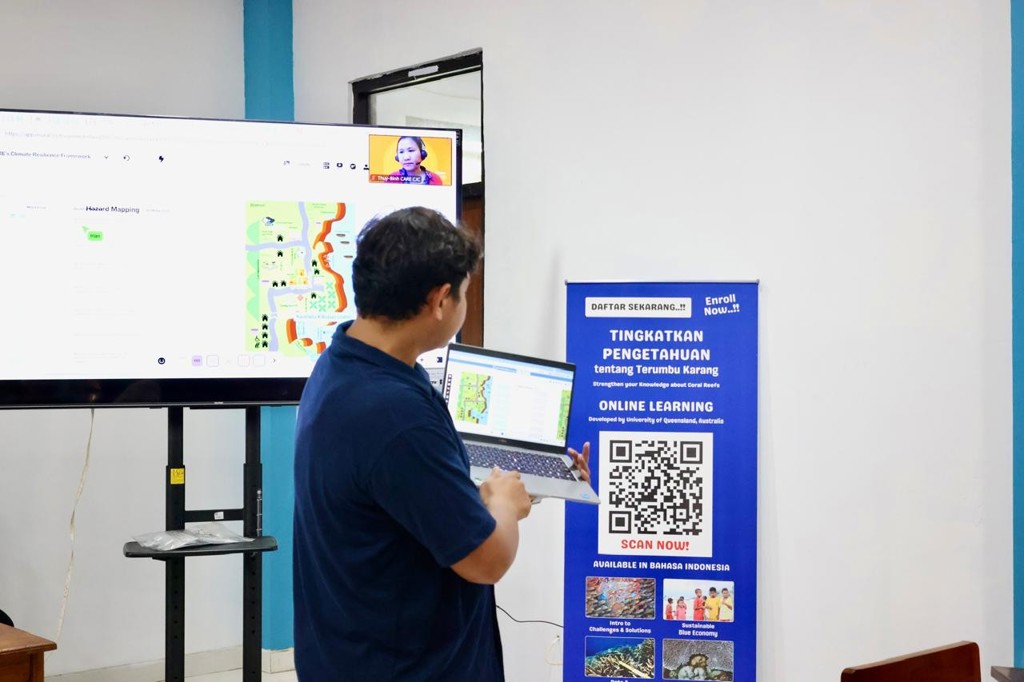
The ClimateREEFS team invited the Coral Reef Rescue Project to share their expertise and free online coral reef resources with workshop participants as well as local managers and policy makers. The workshop highlighted the impact of translating science into on-the-ground conservation work with local communities and researchers.
The support for the workshop was evident in the level of engagement from key Indonesian government agencies, including the Ministry of Marine Affairs and Fisheries and the National Research and Innovation Agency, who opened the workshop by providing an update on the status of current coral reef conservation in Indonesia. This was followed by a series of workshops and seminars focusing on the latest scientific findings on global warming and coral reef health. For more details on the workshop activities, see our dedicated article.
About the project
The Coral Reef Rescue Project is a US$7m initiative funded by the Global Environment Facility to build capacity and solutions that ensure the long-term survival of climate refuge coral reef ecosystems and the communities that depend on them. The project is implemented by the World Wildlife Fund and executed by The University of Queensland in partnership with Wildlife Conservation Society (Fiji, Madagascar, Solomon Islands), Yayasan Reef Check Indonesia, Palawan Council for Sustainable Development, Philippines and Marine Parks and Reserves Unit, Tanzania.
The ClimateREEFS project and the “IntegrateAdapt” capacity strengthening training are funded by the CLARE programme, to enhance and adapt sustainable reef fisheries in Indonesia and the Philippines. CLARE is a £110m, UK-Canada framework research programme on Climate Adaptation and Resilience, aiming to enable socially inclusive and sustainable action to build resilience to climate change and natural hazards. CLARE is an initiative jointly designed, funded and run by the UK Foreign Commonwealth and Development Office and Canada’s International Development Research Centre. CLARE is primarily funded by UK aid from the UK government, along with the International Development Research Centre, Canada.

.jpg)