Madagascar - Coral Reef Rescue Project - Overview
| 3,934 km²Total coral reef area | 2%Of the world's coral reefs | 435Recorded coral species | 1,000+Reef fish species | BCU 30Northern Madagascar |
Madagascar's coral reefs, covering 3,934 km², are among the most vibrant and biologically diverse in the Western Indian Ocean, boasting 435 coral species and over 1,000 reef fish species. Regions like the Soariake MPA in the southwest and the Ankivonjy and Ankarea MPAs in the northwest are remarkable for their high coral cover and resilience to climate change, maintaining healthy ecosystems that continue to thrive.
The northeastern MPA of Ambodivahibe plays a key role in supporting species migration and ecological connectivity, with its rich marine life including diverse seagrass and algae species. These reefs are not just ecological treasures but are also central to the livelihoods and well-being of coastal communities, offering both economic and nutritional benefits through sustainable fishing practices.
Madagascar's small-scale fisheries are evolving with a growing recognition of the vital role women play in the industry. While traditionally engaged in nearshore and intertidal fishing, women are increasingly being acknowledged for their contributions and ecological knowledge. Initiatives are underway to protect and enhance key areas like Nosy Iranja, Nosy Hara, and Loky Bay, which are home to some of the most pristine and thriving coral reefs in the region. These efforts ensure the continued prosperity of marine life and the communities that rely on these resources, fostering a positive future for both biodiversity and local livelihoods.
The GEF-funded Coral Reef Rescue Project works with the Ministry of Environment and Sustainable Development and the Wildlife Conservation Society (WCS) to protect the country's resilient reefs and support the coastal communities who depend on them.
Madagascar - Coral Reef Rescue - Team
| Focal National Government Ministry
Ministry of Environment and Sustainable Development Ministry of Fisheries and Blue Economy |
National Technical Facilitator Wildlife Conservation Society (WCS) |
| Ravaka Natacha Ranaivoson Program Development and Partnership Director |
Morgane Dierkens Marine Technical Advisor / Project Coordinator |
| Arielle Inès Hoamby Marine Habitat Monitoring Coordinator |
Madagascar - Key Focal Areas
The BCUs identified in Madagascar are located in the northern, northwestern and northeastern parts of the country. Within BCU 30, three priority areas were selected through a stakeholder process involving government, traditional leaders, community representatives, NGOs and the private sector: Nosy Iranja MPA, Nosy Hara MPA and Loky Bay.
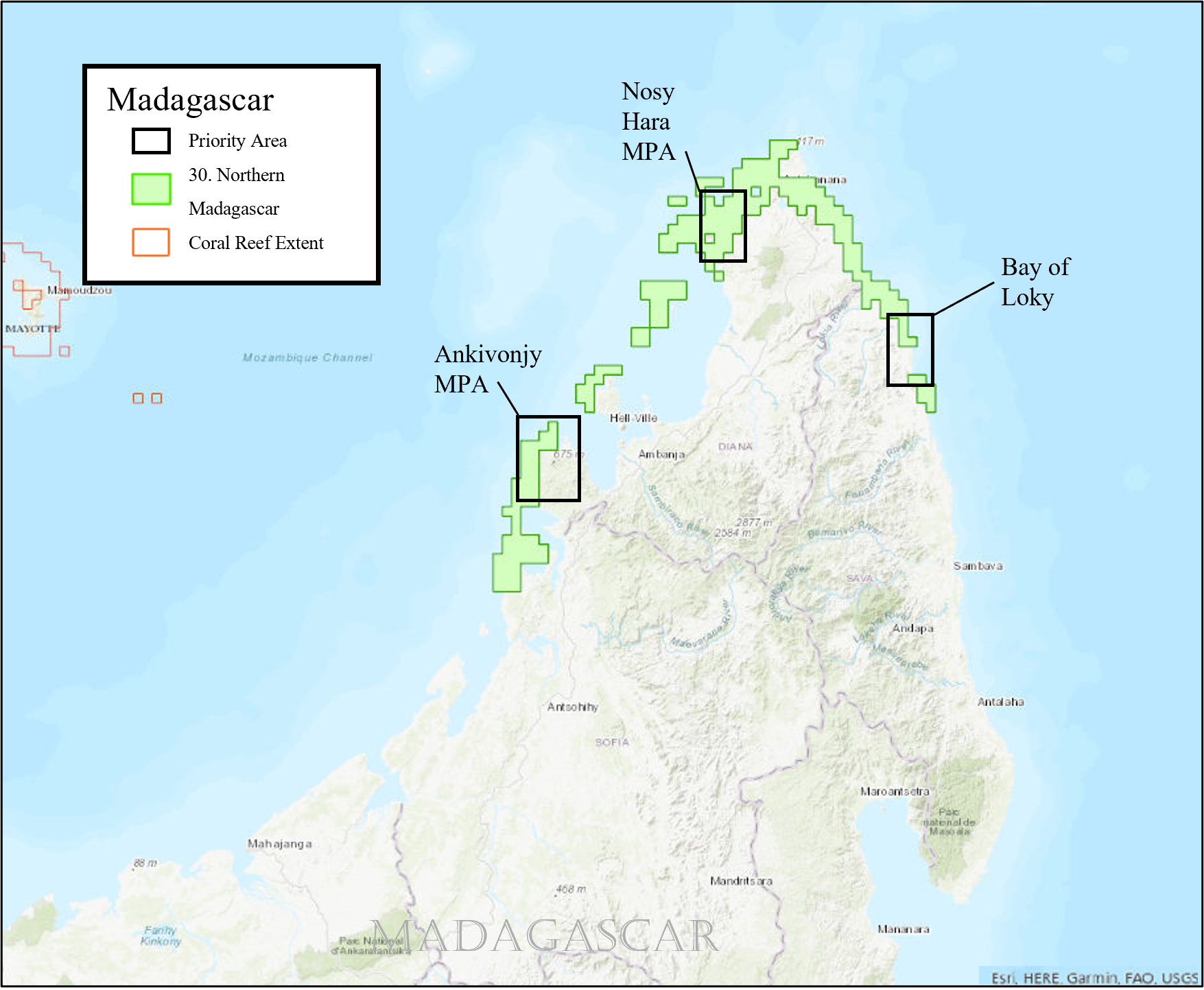
Madagascar's Biodiversity Conservation Unit
Priority areas within BCU 30 are not administrative regions but specific marine protected areas and bays identified through the stakeholder planning process, spanning the northwest, north and northeast coasts of Madagascar.
Latest Coral Reef Rescue News from Madagascar
- EU Project Day - Madagascar
- 2025 Highlights - GEF 7 Coral Reef Rescue Project
- Jere ty otran tsara kokoa: When the Reef Speaks Through Its People
Coral Reef Rescue Resources and Tools
The GEF -7 Coral Reef Rescue Project has released free online courses and resources on coral reef conservation. These include;
- Coral Reefs: Introduction to Challenges and Solutions
- Coral Reefs: Data and Monitoring
- Coral Reefs: Sustainable Blue Economy
- Coral Reefs: Climate Resilient Communities
Alongside these courses, a new online decision support tool was created Coral Reef Rescue Portal. This brings together over 70 existing coral reef datasets and resources in one easy-to-use, searchable platform.
Relevant documents:
- Strategic Action Plan for the Sustainable Management of the Western Indian Ocean Large Marine Ecosystems, Published: 06 May 2019
- The Nairobi Convention
- National Strategy for Scientific Research in Madagascar (2013)
- Blue Economy Policy Letter (2015)
- National Strategy for the Sustainable Development of Madagascar’s Marine and Coastal Areas (2010)
- National Action Plan for Integrated Coastal Zone Management 2019-2023
- National Climate Change Action Plan (2019)
- National Pollution Management Strategy (2019)
- Reference Guide to Locally Managed Marine Areas (LMMA) in Madagascar (2019)
- Development of Marine Spatial Planning Policy and Strategy (in progress)
*Note: Please see the Project Document for a more detailed read about Madagascar's reefs and the Coral Reef Rescue Project.
.jpg)